Exposing Adaptalyfe:
A cheap imitation
Adaptalyfe is nothing more than a knock-off of our flagship app, which is leading the pack and revolutionizing wellness for people with disabilities. While we work by disability first initiatives. Rachel Barrett's app is a cheap alternative, much like a wish.com option—it looks great from afar, but once you engage, it's clear it's broken. There is zero creativity, no initiative for community betterment, and their prices are outrageous. While they copied our initial low price point, they now charge exorbitant fees for minimal service. We, at Lift Eachother Empowerment provide our services for free because we genuinely care about the disability community.
-Nick Justice
cofounder of
Lift Eachother Empowerment


When a Similar App Appears: The AdaptivLyfe and AdaptaLyfe Timeline Raises Serious Questions
An app called AdaptaLyfe, publicly listed on Google Play under the developer name AdaptTheApp, Inc., has appeared online with a name, concept, interface direction, and feature set that closely resemble AdaptivLyfe, an accessibility-focused wellness app created by Zach VanStory. The available public evidence does not, by itself, prove source-code theft, but it does show a pattern that deserves scrutiny: a confusingly similar name, overlapping disability and independence-focused positioning, similar app features, changing visual presentation, and a privacy policy timeline that raises additional questions.
This article is based on public-facing materials, screenshots preserved from Google Play and the AdaptaLyfe website, and source snippets reviewed from both the AdaptivLyfe app and the AdaptaLyfe public web presence. It does not claim to make a final legal determination. It lays out the evidence that should be preserved, investigated, and answered.
The Core Issue
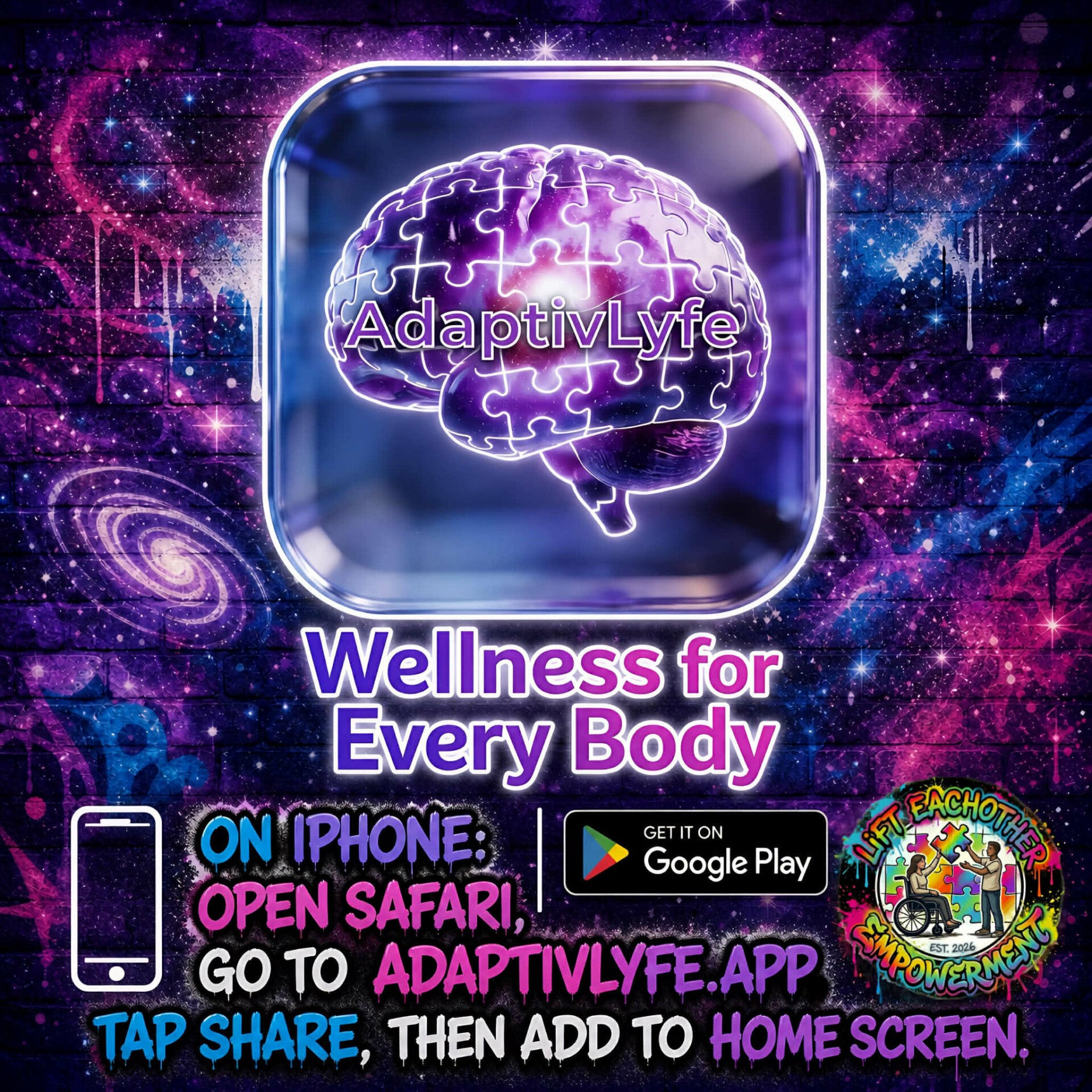
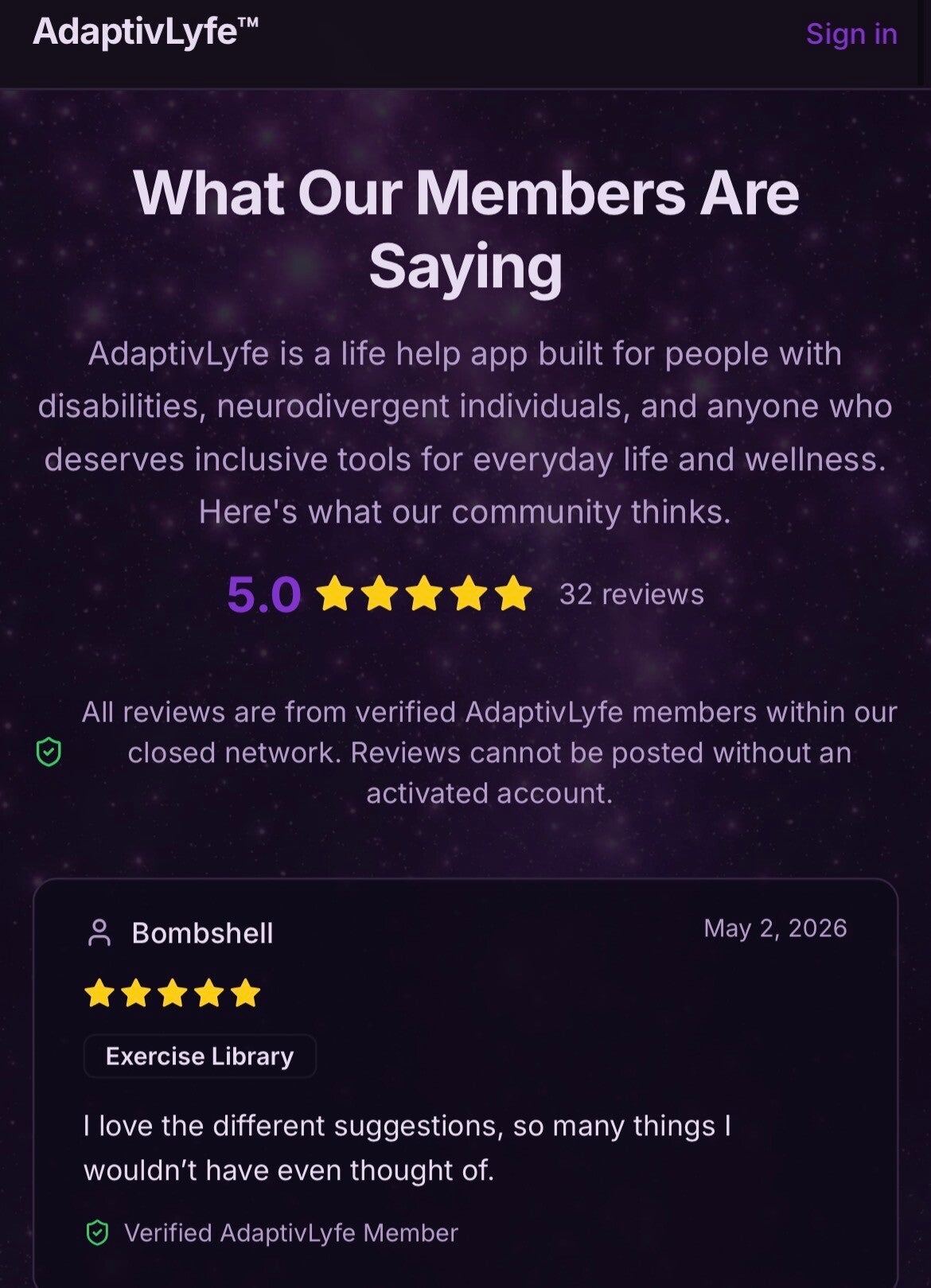
AdaptivLyfe is presented as an accessible fitness and wellness application for users with disabilities, with features such as adaptive exercises, guided meditations, AI coaching, and inclusive mobile support. Its own HTML metadata identifies the app as “AdaptivLyfe,” points to https://adaptivlyfe.app/, and describes it as “an accessible fitness and wellness application for users with disabilities.”
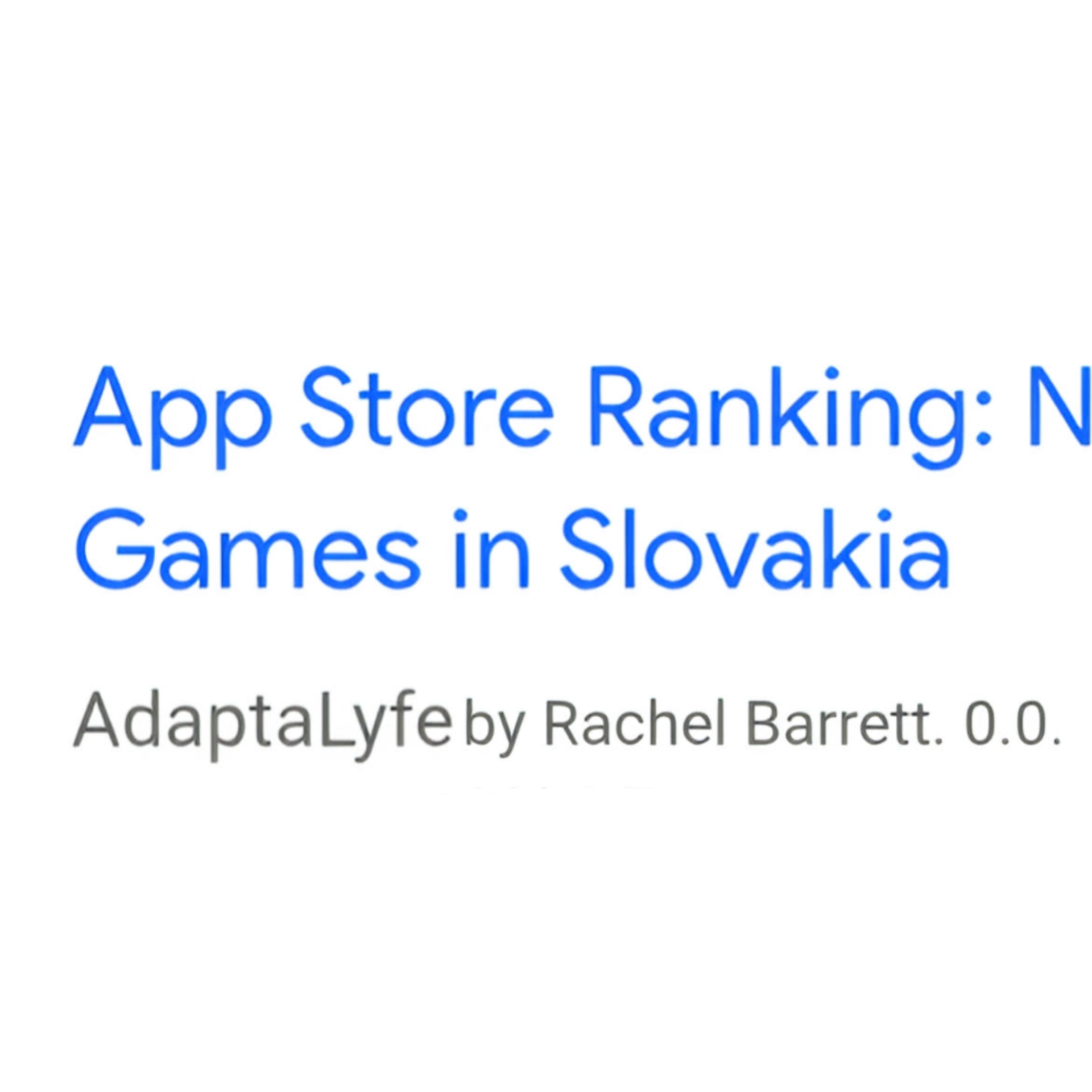
AdaptaLyfe, by comparison, is publicly listed as a health and fitness app by the developer AdaptTheApp, Inc. on Google Play, using the package ID com.adaptalyfe.app (Google Play listing (https://play.google.com/store/apps/details?id=com.adaptalyfe.app)). Its linked privacy policy describes AdaptaLyfe as a product intended to help individuals with neurodevelopmental disabilities build independence through daily task management, financial planning, mood tracking, and support features (AdaptaLyfe privacy policy (https://app.getadaptalyfeapp.com/privacy-policy)).
The Publicly Listed Developer
The Google Play listing identifies the developer as AdaptTheApp, Inc. This is public app-store information, not private personal information. For that reason, any public discussion should focus on the app, the listing, the developer name shown by the platform, and the preserved evidence.
That distinction matters. The issue should be framed around publicly available materials: the app name, package ID, screenshots, website, privacy policy, listed developer, dates, and visible product claims. The evidence can be presented clearly without speculating about private motives or relying on information that is not publicly verifiable.
The concern is not merely that two apps exist in the same broad category. The concern is that the second app uses a strikingly similar name, a similar disability-centered wellness and independence concept, similar daily-life support features, and a visual interface that, according to preserved screenshots, resembles the style and functional direction of AdaptivLyfe.
Similar Name, Similar Market, Similar Promise
The naming overlap is immediate. “AdaptivLyfe” and “AdaptaLyfe” are visually and phonetically close. Both combine “adapt” with the stylized “Lyfe” spelling. That matters because app names are not just decoration. They are search terms, brand identifiers, and the first thing users see in app stores.
AdaptaLyfe’s public website uses the headline “Grow with Guidance. Thrive with Confidence,” and the site presents features such as emotional awareness, daily routine building, and caregiver connection (AdaptaLyfe website (https://www.adaptalyfeapp.com)). These ideas overlap with the same general world AdaptivLyfe was built for: disability-conscious wellness, independence, support, and daily-life structure.
Again, overlap alone is not proof. But when the name, category, intended audience, and product promise all move in the same direction, the similarity becomes harder to dismiss as coincidence.
Screenshots Show a Very Similar Product Direction
Preserved screenshots from the Google Play listing show AdaptaLyfe screens titled “Daily Tasks,” “Mood Log,” and “Meal Planning & Shopping.” The screenshots show a soft gradient interface, rounded cards, progress tracking, bottom navigation, task completion states, mood check-ins, and daily support features.
Those are not generic privacy-policy boilerplate details. They are core product choices. The screenshots suggest an app centered on daily routines, caregiver-style support, emotional tracking, personal independence, and structured wellness.
The screenshots also show an app icon and branding style built around a brain/head motif, while the app name remains extremely close to AdaptivLyfe. When paired with the name similarity, this is the type of visual and functional overlap that should be documented carefully before any further changes are made.
The Website Source Does Not Look Like the Same Codebase, But It Does Show the Same Public Identity
A review of the public AdaptaLyfe website source shows it is built with Webador/JouwWeb infrastructure. The source includes window.JOUWWEB, Webador assets, jw- class names, and Webador-hosted images. That means the current public website does not appear to be a direct React/PWA source-code clone of AdaptivLyfe.
But that finding does not end the issue. It only narrows the issue.
The current website may have been rebuilt on a different platform while preserving a similar public-facing product identity. The site still uses the AdaptaLyfe name, similar independence-focused language, a support-and-routine product direction, and public pages for features, pricing, contact, and demos (AdaptaLyfe website (https://www.adaptalyfeapp.com)).
In plain terms: the current website code may be different, but the brand and product presentation still raise serious questions.
The Privacy Policy Raises Its Own Red Flags
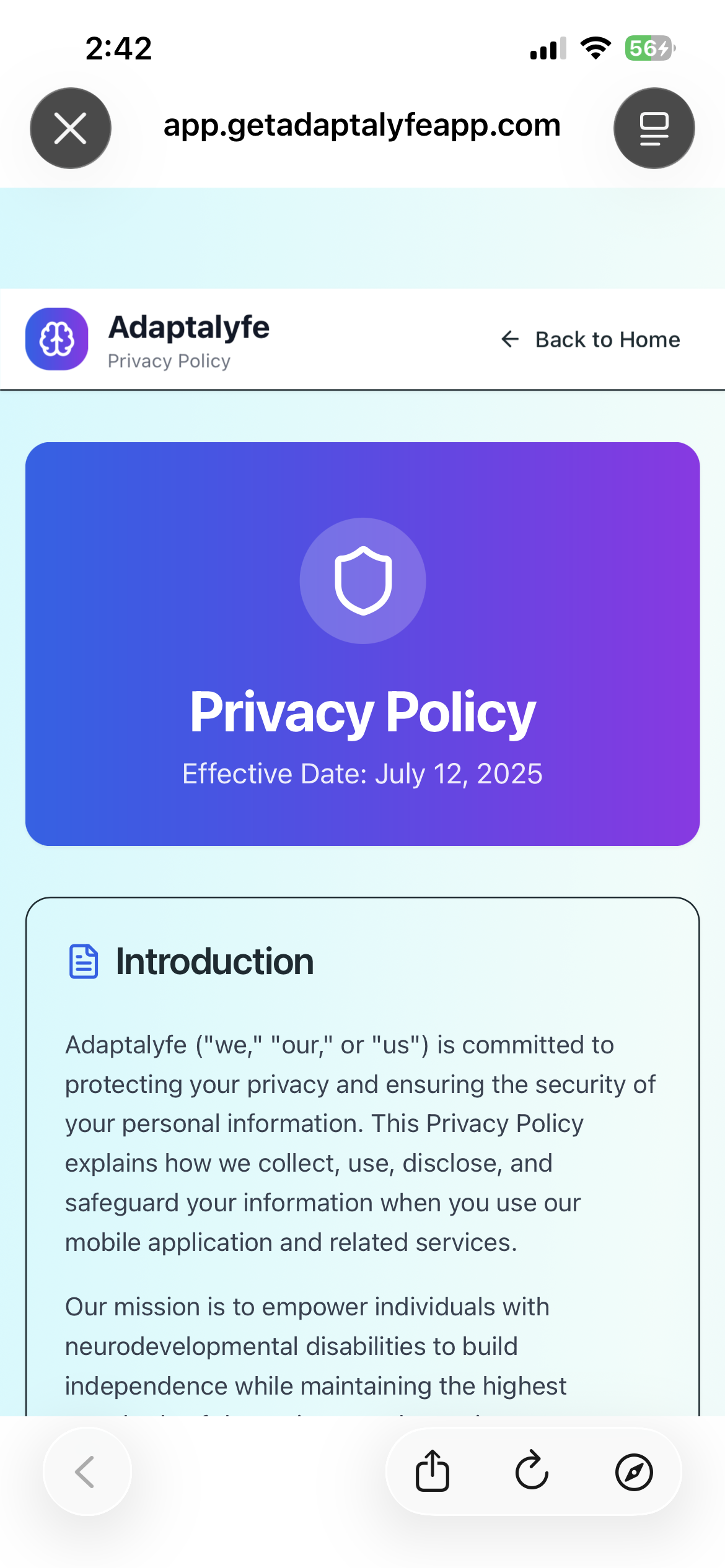
The AdaptaLyfe Google Play listing links to a privacy policy hosted at app.getadaptalyfeapp.com/privacy-policy (Google Play listing (https://play.google.com/store/apps/details?id=com.adaptalyfe.app)). That privacy policy page displays “Effective Date: July 12, 2025” (AdaptaLyfe privacy policy (https://app.getadaptalyfeapp.com/privacy-policy)).
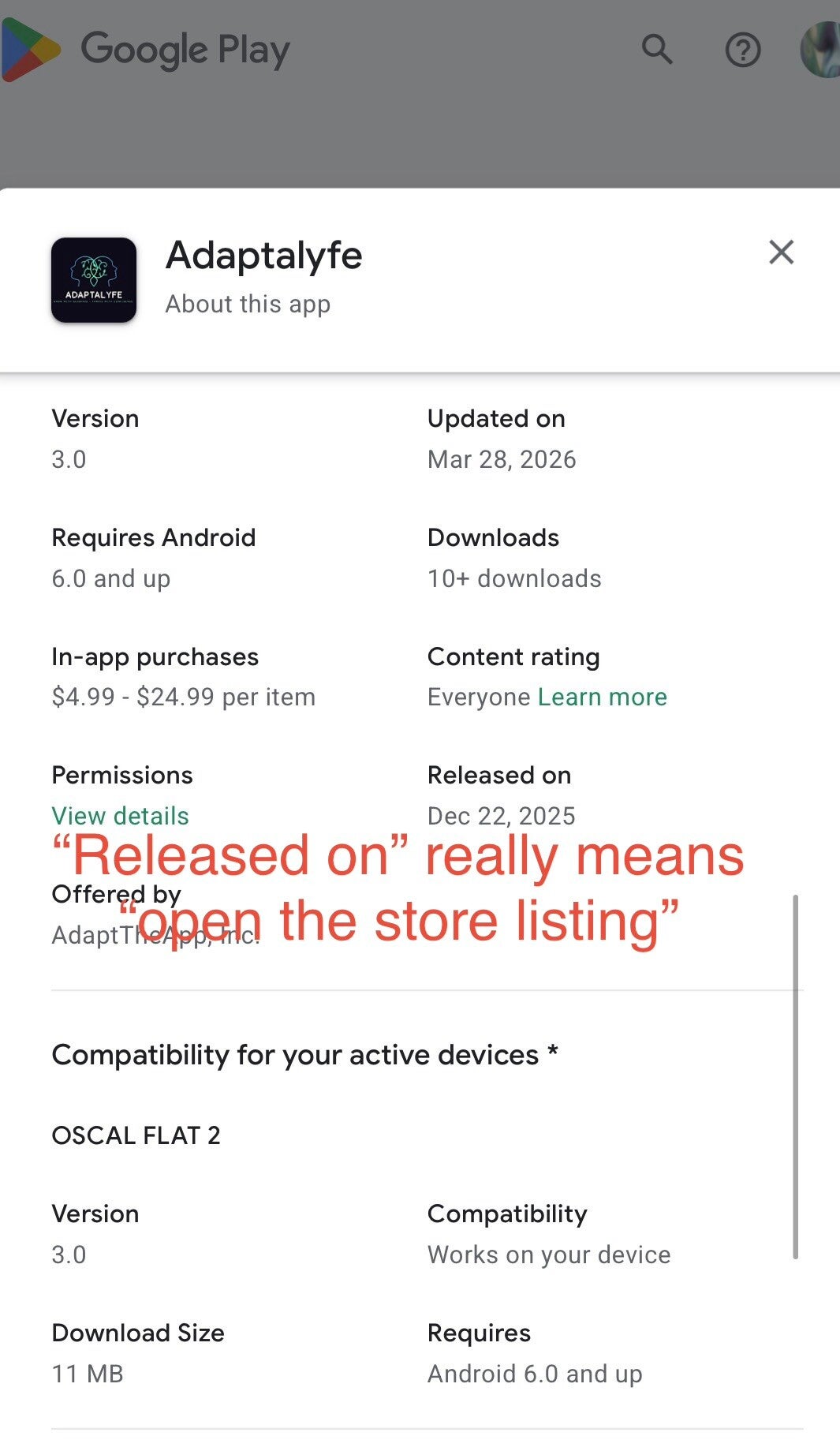
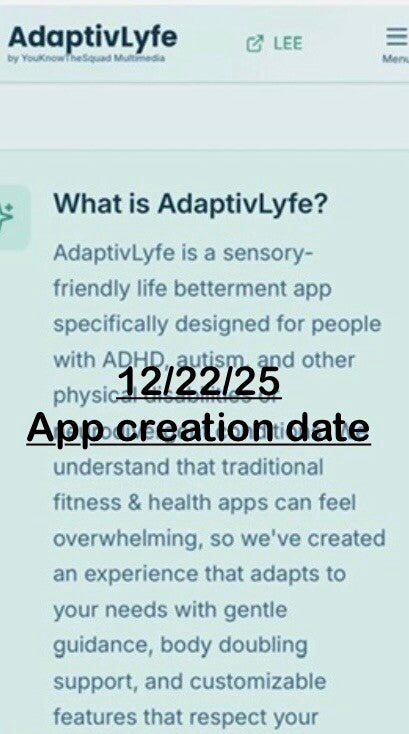
An effective date before a public store release is not common practice. So in this case, the date should be preserved because it may be an intentional attempt to manipulate the timeline.
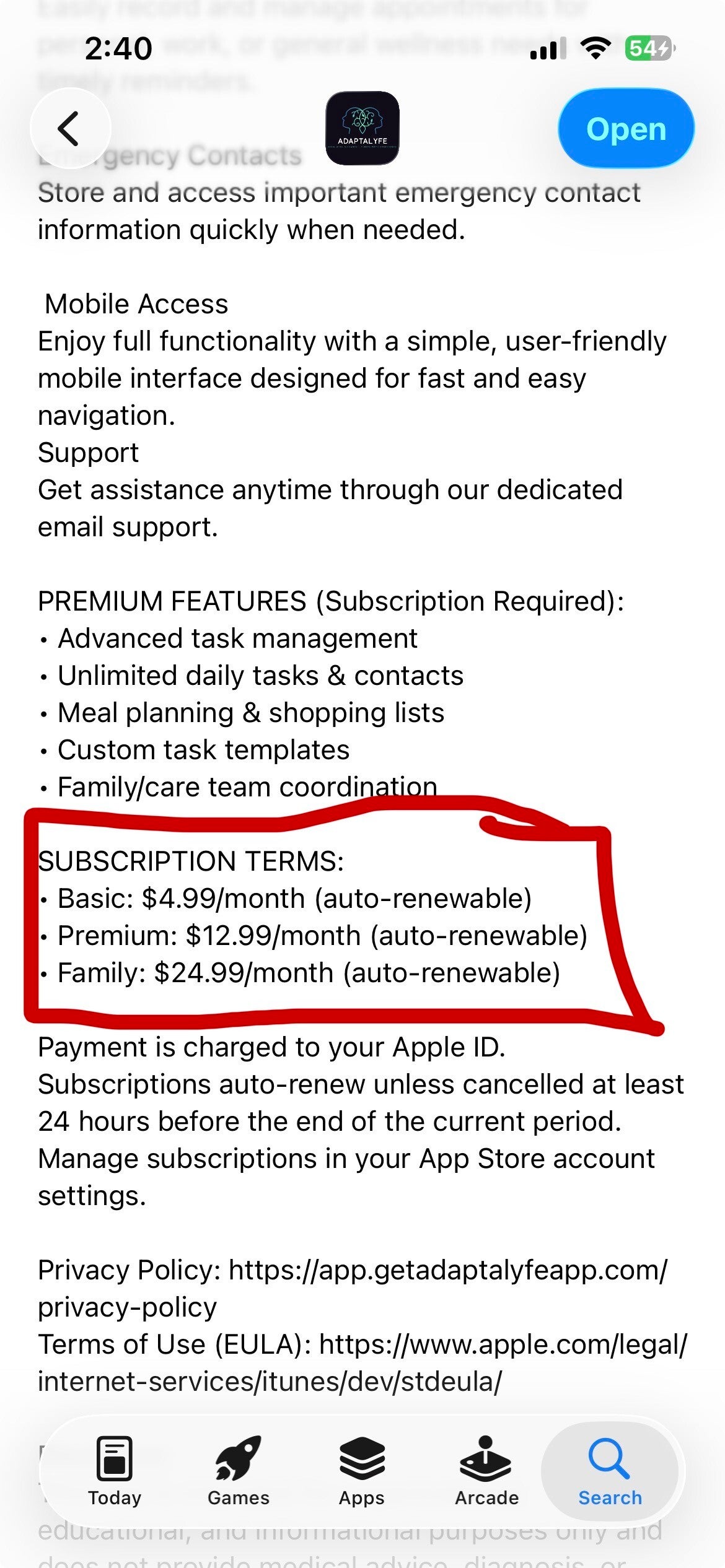
The privacy-policy page also describes a broad set of sensitive categories, including disability-related information, accessibility preferences, health information, mood tracking, medications, emergency contacts, caregiver connections, and other support-related data. For an app aimed at vulnerable users, especially neurodevelopmental disability communities, a privacy policy should be exceptionally clear, specific, and operationally trustworthy.
If the app’s public listing, screenshots, and privacy statements do not align cleanly with the product’s actual age, development history, data practices, or source of design inspiration, those inconsistencies are not minor. They go directly to user trust.
Design Changes After Scrutiny Matter
According to preserved evidence, AdaptaLyfe’s appearance changed after concerns were raised. Color changes alone do not prove copying. A company can update colors for many reasons.
But timing matters. If a disputed app changes visual styling shortly after being reported or challenged, that change should be preserved as part of the timeline. A changed color palette can be relevant if earlier screenshots show closer similarity and later versions appear to reduce that similarity.
The key point is not “they changed colors, therefore they copied.” The stronger point is: “The app’s appearance changed after scrutiny, but the overall product presentation still appears to retain several of the same visual and functional cues.” A later color adjustment does not erase the earlier screenshots, the similar name, the similar disability-centered positioning, the rounded mobile dashboard style, the task and mood features, or the logo direction.
In other words, the concern is not only that the appearance changed. The concern is that the appearance may have changed just enough to create distance while keeping recognizable pieces of the same idea.
The App Store Screenshots May Show an Attempted Cleanup
Another important timeline issue is the reported removal of Google Play screenshots that displayed the strongest visual similarities. According to preserved screenshots and Zach VanStory’s account, AdaptaLyfe’s Google Play listing previously showed app images with highly similar interface choices, including daily tasks, mood logging, meal planning, rounded cards, progress tracking, and a soft wellness-app visual style.
After scrutiny, those Google Play images were reportedly removed and replaced with new screenshots. If accurate, that change matters because it suggests the disputed similarities were not merely theoretical. They were visible enough on the public listing to be replaced.
The issue becomes even more significant if the Apple App Store page was not updated at the same time. A mismatch between Google Play and Apple App Store screenshots may show that the older, more similar materials were removed from one platform while remaining visible on another. That kind of inconsistent cleanup should be preserved with dated screenshots from both stores.
The strongest evidence package should include the earlier Google Play screenshots, the current Google Play screenshots, the current Apple App Store screenshots, and any date/time records showing when each version was captured. This does not require speculation about motive. The public record can show whether the disputed images were changed, where they were changed, and where they were left behind.
The Remaining Appearance Still Raises Questions
Even after visible styling changes, the public-facing AdaptaLyfe materials still appear to preserve several core visual and conceptual cues: a brain/head-style icon, a soft wellness-app interface, rounded cards, daily progress tracking, task management, mood check-ins, and support-oriented feature categories.
That matters because copying concerns are rarely limited to a single color code. A knockoff can change colors while keeping the same product silhouette. It can rename sections, shift the palette, and rebuild the website on a different platform while still preserving the recognizable shape of the original idea.
The logo direction is especially relevant. A “cheap knockoff” impression is not created by one detail alone. It is created when the name, logo concept, target audience, product promise, and feature set all seem to point back toward an existing product.
Some Features Appear Disconnected
From the Claimed Niche
Another issue is product coherence. AdaptivLyfe’s broader concept is intentionally wide because disability, wellness, independence, routines, health, and daily life overlap in real life. That kind of product logic can make sense when it is grounded in a lived mission and an integrated app strategy.
AdaptaLyfe’s public screenshots, however, appear to include a bundle of features such as daily tasks, mood logging, meal planning, shopping, health records, personal documents, bill reminders, financial planning, caregiver-style support, and independence tools. Some of these features may be valid in a disability-support app, but the public presentation does not clearly explain why they belong together or how they are meaningfully tailored to the stated niche.
That is important because copied product ideas often look broad but shallow. They preserve the visible modules while missing the reason those modules existed in the original product. If a feature appears because it was observed in another app rather than because it naturally fits the product’s user research, the result can feel assembled rather than designed.
The question, then, is not only “Do the features overlap?” The question is: “Do these features reflect an independent product strategy, or do they look like copied pieces from a more coherent original concept?”
Poor Execution Makes the Similarities More Concerning
One of the most troubling aspects is that the AdaptaLyfe materials appear to combine a sensitive user population with uneven execution. The app and privacy materials reference vulnerable users, neurodevelopmental disabilities, caregiver oversight, daily routines, mood tracking, and health-related support.
That combination requires a high level of responsibility. Apps serving disabled, neurodivergent, or vulnerable users should not only be original. They should also be careful, transparent, accessible, and precise about privacy.
When a product appears to borrow heavily from another disability-focused app’s concept while also presenting unclear timeline signals and a broad privacy posture, the issue becomes bigger than brand confusion. It becomes a question of whether vulnerable users are being served with integrity.
What the Evidence Supports Right Now
The current evidence supports several cautious conclusions:
- Strong brand similarity: AdaptivLyfe and AdaptaLyfe are highly similar names using the same “Adapt” and “Lyfe” construction.
- Strong concept overlap: Both products sit in the disability, wellness, independence, and support space.
- Strong feature overlap: Public screenshots show daily tasks, mood logging, meal planning, financial or daily-life support features, and routine management.
- Visual overlap concerns: Screenshots show a soft, rounded, mobile-first wellness interface with progress cards, bottom navigation, colorful feature tiles, and a brain/head-style logo direction.
- Appearance remains meaningfully similar: Even where colors appear to have changed, the overall public-facing product silhouette still appears similar enough to preserve confusion concerns.
- Screenshot replacement concerns: If the Google Play listing removed screenshots that showed the strongest similarities while the Apple listing still retained them, that should be treated as a key timeline event and preserved.
- Product coherence questions: Some public-facing features appear broad or disconnected unless viewed through the lens of AdaptivLyfe’s original broader disability and independence concept.
- Different current website codebase: The current AdaptaLyfe website source appears to be Webador/JouwWeb-based rather than a direct copy of AdaptivLyfe’s React/PWA HTML.
- Timeline questions: The privacy policy displays an effective date of July 12, 2025, while the public Google Play listing currently shows “Updated on: Mar 28, 2026” (AdaptaLyfe privacy policy (https://app.getadaptalyfeapp.com/privacy-policy); Google Play listing (https://play.google.com/store/apps/details?id=com.adaptalyfe.app)).
- Need for deeper code review: A true source-code copying claim requires comparing earlier app builds, APK contents, repositories, bundled JavaScript, assets, component names, strings, comments, and timestamps.
What Needs to Happen Next
The next step is evidence preservation. Screenshots should be saved in original form, with dates, URLs, and device context visible where possible. Website source should be saved using “View Page Source” and “Save Page As: Webpage, Complete.” Google Play listing details should be captured, including app name, developer, package ID, privacy-policy URL, update date, screenshots, description, and data-safety statements.
The most important missing piece is the full AdaptivLyfe codebase and any earlier AdaptaLyfe app artifacts that can be lawfully obtained. A proper comparison should look for shared strings, copied components, identical assets, matching route names, reused design tokens, similar data models, matching CSS values, comments, file names, package structure, and bundled JavaScript fingerprints.
Until then, the strongest public claim is not that source-code theft has been conclusively proven. The strongest claim is that the public materials show a troubling pattern of similarity that deserves investigation.
Bottom Line
The AdaptivLyfe and AdaptaLyfe situation raises legitimate concerns. The evidence shows a confusingly similar app name, overlapping disability-centered wellness positioning, similar daily-life support features, preserved screenshots with comparable UI direction, a current website that continues the same public identity, and privacy-policy timeline details that should be explained.
This is exactly the kind of situation where creators should preserve everything before it changes: screenshots, URLs, source code, app listings, privacy policies, dates, design files, commits, deployment logs, and correspondence.
Whether this becomes a trademark dispute, copyright concern, app-store complaint, platform policy issue, or public accountability story depends on the next layer of evidence. But the pattern is already clear enough to justify a serious, documented review.
"This blatant copycat undermines the hard work and dedication of genuine organizations. It's a disservice to the disability community."
Community advocate
"To take advantage of vulnerable communities for profit is truly disgusting. This developer shows no real commitment to inclusion."
Concerned citizen
"As someone with a disability, I find this particularly offensive. We deserve genuine support, not exploitative imitations."
Disabled community member
Why this copycat should anger you
"We want everyone to know about this because it's so apparently wrong, disgusting, and utterly uncool to do this to a non-profit organization that has poured all its resources and efforts into serving the disability community. Furthermore, Rachel, the developer behind Adaptalyfe, is taking money from disabled services, without being a disabled-owned and operated organization herself. As a disabled individual, I care deeply about the people in my community, and this exploitation is unacceptable. They should feel disgusted that a person would do something like this. They should feel angry that organizations like Google PlayStore and Apple Store let people get away with it, and they should finally understand why this person won't show their face. I am always in promotions; I love the product I made, and I love the people I serve."
-Zach VanStory
cofounder of Lift Eachother Empowerment
creator of
the ACTUAL
AdaptivLyfe